We Ate Our Way Through Murcia's Zarangollo and Paparajotes Menu

Ask a Murcian what to eat and you'll get a ten-minute lecture, a second opinion from the bloke at the next table, and probably a free tapa. Ask them about zarangollo and paparajotes and they'll go quiet for a second, like you've mentioned their mum. These two dishes are the savoury and sweet bookends of the region, and after a few weeks of research (that's what I'm calling it) I can tell you exactly how to eat both without embarrassing yourself.
Here's the plan I'd follow if you were staying near Roda for a week this October.
Step One: Get Your Head Around Zarangollo
Zarangollo is courgette and onion, slowly cooked in olive oil until it collapses into a soft, sweet, slightly sticky mess. Then eggs go in and get scrambled through it. That's it. It sounds like something you'd feed a toddler, and then you taste it and wonder why you've been wasting your life on chips.
The name comes from the Murcian word for a muddle, which is fair. It's humble farmhouse cooking, the sort of thing grandmothers made from whatever was rotting in the veg drawer. Some places leave out the egg and serve it as a plain sofrito-style side. Others add a bit of potato. Both are fine, but I'm firmly in the egg camp and I'll defend that at the bar.
How to order it
Look for it under entrantes or tapas. You'll usually see it as a ración (a full plate to share) or a media ración (half). For two people, a media is plenty if you've other plates coming. Ask for pan straight away, because you'll want something to mop with. A tostada de zarangollo is the lazy version, and often the best value.
Don't expect it piping hot and sizzling. It's supposed to be soft and warm, nearly spoonable. If it arrives with crispy edges, somebody's been showing off.
Where I'd go looking
Start in Los Alcázares, along the paseo and the streets behind it. The little family-run bars away from the seafront are where it tends to be best, and cheapest. Santiago de la Ribera and Lo Pagán are good bets too, since the cooks there treat veg with more respect than you'd expect from places that sell so much fried fish. Do the Wednesday market first, buy a couple of courgettes for a laugh, then go and see what a professional does with them.
Step Two: Tackle the Paparajotes
Right, the weird one. Paparajotes are lemon leaves, dipped in a sweet batter, fried, then rolled in sugar and cinnamon. You don't eat the leaf. I mention this because every October someone's uncle tries to, and the rest of us have to pretend we didn't see.
You hold the stalk, bite the batter off the leaf, and leave the leaf on the plate. The batter takes on a faint lemon scent from the leaf, which is the whole point. It's crisp outside, soft in the middle, a bit like a posh doughnut with a citrus hint.
The etiquette bit
Order them at the end of the meal, and order for the table. A portion is usually four to six, so two people can share one without drama. Eat them while they're warm. Cold paparajotes are sad, floppy things, and I won't be taking questions.
Pair them with a cortado or a asiático, the Cartagena speciality with condensed milk, brandy and a touch of cinnamon. It's a bit much after a big lunch, but it's October, nobody's judging.
Is it a restaurant thing or a home thing?
Both. Plenty of restaurants in the area will have them on the dessert menu, but they're also a classic at fiestas and family gatherings. Lemon trees are everywhere around here, so don't be surprised if a neighbour offers you a bag of leaves. If you're renting somewhere with a garden, check the holiday rentals near Roda Golf for ones with lemon trees. Genuinely, it's a thing, and frying your own is a laugh.
Step Three: Build the Perfect Murcian Menu
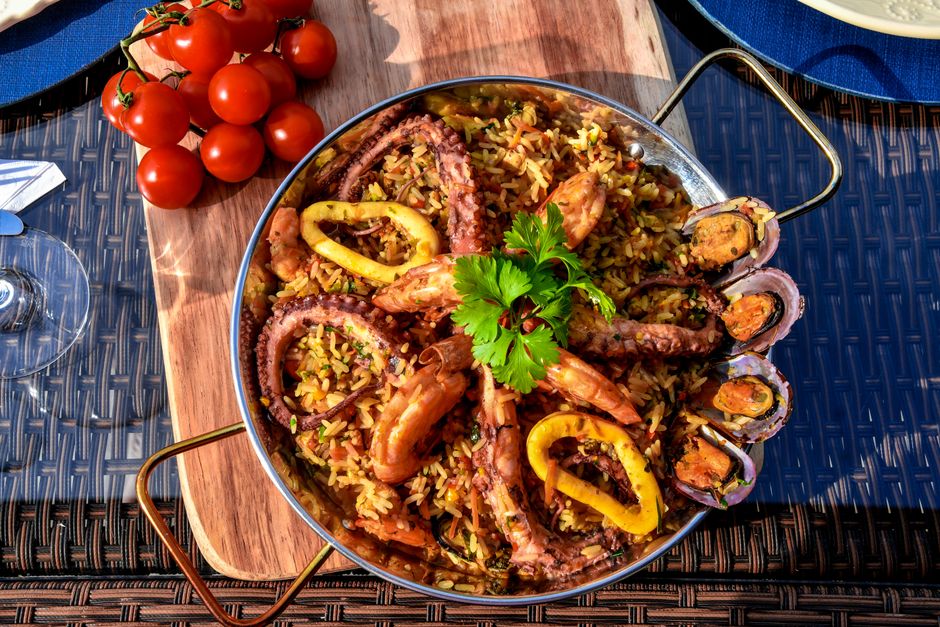
Here's how I'd do a proper sit-down lunch. Start with a media ración of zarangollo and a few other tapas, maybe some michirones (broad beans with ham) or marinated anchovies. Order a caldero if you're hungry and have an afternoon to lose. Finish with paparajotes and coffee.
If you're on a budget, the menú del día often includes zarangollo as a starter, but paparajotes tend to cost extra as a dessert special. Ask what's on the dessert board before you commit. It's usually between three and five euros for a portion.
Timing matters. Lunch is from about 2pm, and plenty of kitchens shut by 4pm. Evenings start from around 8.30pm. Turn up at noon and you'll be eating off the staff's crisps.
Making a day of it
I like to do a morning round on the golf courses at Roda, then wander down to the coast for lunch. October is perfect for it. It's cool enough to walk the fairways without melting, and warm enough to sit outside afterwards. If you're still working out where to base yourself, the area guide for Los Alcázares and the Mar Menor will help you pick a spot that suits your appetite.
Final Tips From Someone Who's Eaten Too Much
Go with a group. Both dishes are made for sharing, and you'll try more that way. Ask the waiter what's best that day, since they'll often point you to something off menu. Learn "¿qué me recomienda?" and you'll be fine.
Don't be shy about going back to the same place twice. Cooks round here notice, and the second visit often brings a better portion, or a little extra something with the bill.
For more ideas on what to eat in the area, have a browse through our food and drink guides. And if you've got a favourite zarangollo spot I've missed, tell me. I'll happily go and test it. For science, obviously.
Roda Golf Team
The official Roda Golf and Beach Resort team, bringing you the latest news, tips, and insights about life at the resort.