La Manga Strip: June Sightseeing Guide from Roda Golf
Twenty-one kilometres of narrow land with sea on both sides and a lighthouse at one end. La Manga Strip sounds simple enough, but most people drive straight through it without stopping at the things actually worth stopping for. In June, before the August crowds turn the Gran Vía into a car park, it's genuinely good. Here's how to use a day on the strip properly.
Start Early, Drive South
Leave Roda Golf no later than 9am. By 11 the heat is real, and by midday you'll want shade and cold water rather than a walk along a seafront. June temperatures sit around 28-32°C and the strip has limited shade between stops.
The sensible route is north to south: enter the strip from Lo Pagan or San Pedro del Pinatar, work your way down to Cabo de Palos, then head back in the early evening when the light is better and the temperature drops. You'll be driving into the sun less, and you'll hit the best lunch spots at the right time.
Parking is still manageable in June. The car parks near Las Encañizadas at the northern end are usually fine before 10am. Cabo de Palos gets busier, but it's rarely impossible before noon. By mid-July that calculation changes completely, but you've got the good window right now.
What to Actually Stop For
Most people treat La Manga as a destination in itself, which is a mistake. The strip is a route, not a resort. These are the spots that justify slowing down.
Las Encañizadas
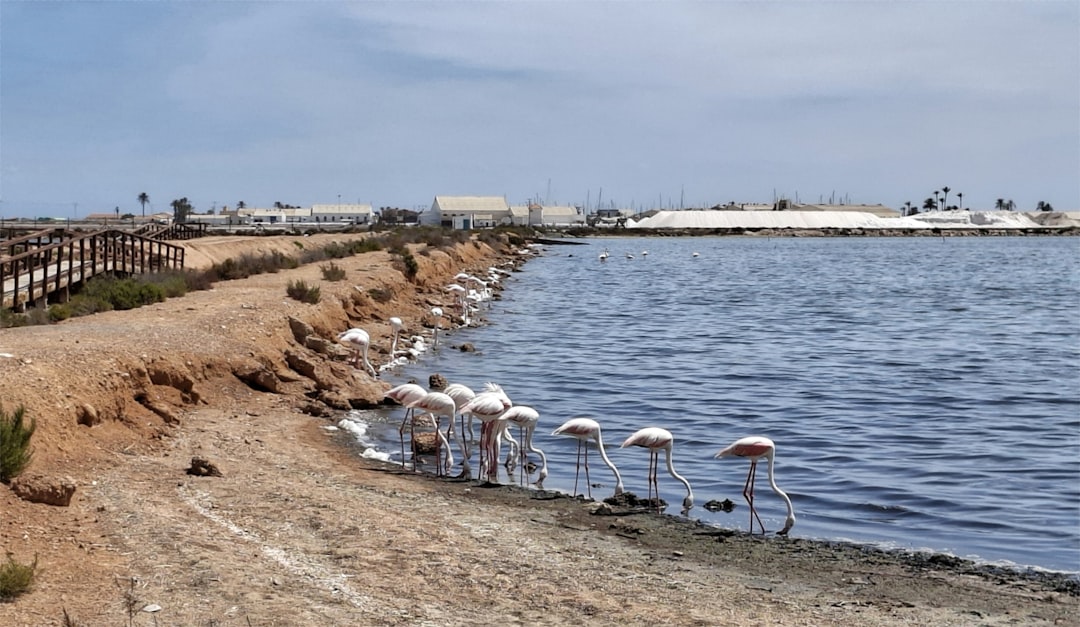
This is the northern pinch point where the Mar Menor connects to the Mediterranean through a series of narrow channels. The encañizadas are ancient fish traps, still functioning, dating back centuries. The principle hasn't changed: fish swim in with the current and the trap closes behind them. It's unglamorous and genuinely interesting. You can walk out along the wooden platforms, and on a clear June morning the colour contrast between the warmer, shallower Mar Menor water and the deeper Mediterranean is obvious. Stop here first before the light gets harsh.
The Watchtowers
The strip has a string of 16th and 17th century torres (watchtowers) built to spot Barbary pirate raids. Torre de la Encañizada and Torre Navidad are the most visible from the road. They're not museums, there's nothing to go inside, but if you pull over and walk up to one you get a proper sense of why this coastline was worth watching. The views from the base are excellent. In June the prickly pears around them are flowering yellow, which is a nice bonus.
Cabo de Palos Lighthouse
The lighthouse at the southern end is the main landmark most people associate with La Manga, and it earns its reputation. The walk up from the village takes about ten minutes and the view back along the strip is the best you'll get anywhere on it. The village itself is small, worth a wander, and has some of the best fish restaurants in the whole Mar Menor area. If you're going to spend money on lunch anywhere on this trip, spend it here.
Lunch and the Afternoon
Cabo de Palos has a handful of restaurants that do rice dishes (arroz caldoso, arroz a banda) properly, not in the tourist-trap sense you get in the middle of the strip. La Tana is reliable. So is Restaurante Miramar if you want a terrace with a sea view. Expect to pay around €15-20 for a main course. Book ahead if you're going on a Saturday.
After lunch, the Mar Menor side of the strip is the place to be. The water is calm, shallow, and in June still below its peak-August temperature, which makes it actually refreshing rather than bathwater. The beaches on the Mediterranean side have bigger waves and more wind. Both have their uses, but if you're with kids or just want to swim without fighting a current, stay on the Mar Menor side. The Mar Menor coastline near Lo Pagan is equally good for a late-afternoon swim on the way back if you don't want to spend the full day on the strip.
The chiringuitos along the strip vary a lot. The ones closest to the main road tend to be overpriced. Walk two minutes towards whichever beach you're on and you'll find something better. Most open by 11am in June and stay open well past sunset.
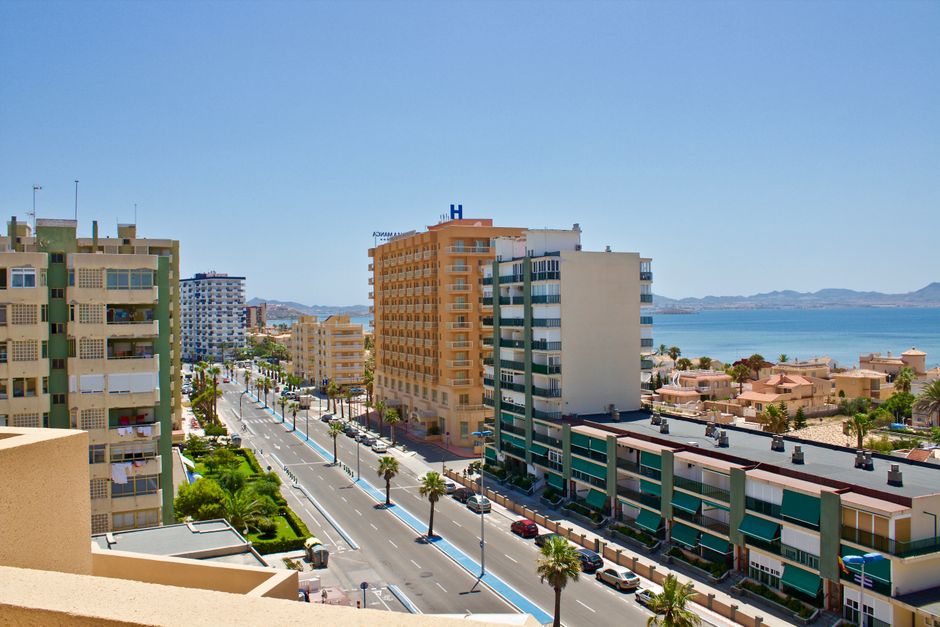
One thing worth knowing: the strip has a clear "local" end and "tourist" end. The northern stretch near Lo Pagan and San Pedro is quieter, cheaper, and used mostly by Spanish families from Murcia city. The middle section, around the Veneziola complex and the main hotel strip, is where the package tourists concentrate. There's no need to spend much time there unless you want a supermarket or a cash machine.
Getting Back and What to Skip
Head back before 7pm if you want the drive to be pleasant. The strip has one road in and one road out, and early evening in June already has enough traffic to make it tedious if you leave it late. In July and August, leaving after 8pm can mean an hour to drive five kilometres. You've been warned.
Skip the boat trips advertised in the middle of the strip. They're fine, but the better Mar Menor boat trips leave from Los Alcazares and San Javier, where the boats are in better condition and the operators know the lagoon properly. If that's what you're after, the sightseeing category on the blog has more on water-based options from the Roda Golf side of the coast.
If you're planning the trip around a longer stay, the strip pairs well with a morning at the Cabo de Palos Marine Reserve (excellent snorkelling) and an evening in Cartagena. Both are close enough to make a reasonable two-day loop without retracing your route. Anyone looking at holiday rentals near Roda Golf will find the location puts all of this within easy reach without fighting Murcia city traffic.
June is the right month. Come August, the strip is a different experience entirely, and not in a good way. Use the window while it's there.
You might also enjoy reading about Beat the June Heat: Roda Golf's Best Early Morning Tee Times.
You might also enjoy reading about Cartagena: Roman Ruins Day Trip from Roda Golf in June.
You might also enjoy reading about Murcia City Cathedral & Old Town: Half-Day Trip from Roda.
You might also enjoy reading about Roda Golf Resort Announces August 2026 Tournament Calendar.
You might also enjoy reading about Roda Golf's 5 Most Scenic Holes: A Summer Course Guide.
You might also enjoy reading about Paparajotes: Where to Try Murcia's Signature Dessert Near Roda.
You might also enjoy reading about Jun Beach BBQ Spots for Families Near Roda Golf 2026.
You might also enjoy reading about Roda Golf Resort's Junior Golf Academy Opens July 2026.
You might also enjoy reading about How to Read Roda Golf's Greens: A Course Strategy Guide.
You might also enjoy reading about 5 Summer Night Markets Near Roda Golf: June 2026 Guide.
You might also enjoy reading about Lorca Castle: Murcia's Fortress Day Trip from Roda Golf.
You might also enjoy reading about Beat July's Heat: Murcia's Best Granizados Near Roda Golf.
You might also enjoy reading about 5 Air-Conditioned Family Activities Near Roda Golf for July 2026.
You might also enjoy reading about Roda Golf Debuts New Clubhouse Restaurant Menu for Summer 2026.
You might also enjoy reading about 5 Golf Gear Essentials for Surviving Roda's July Heat.
You might also enjoy reading about Roda Golf vs La Manga Club: Which Suits July Golfers?.
You might also enjoy reading about 5 Things to Know About Cartagena's La Mar de Músicas Festival.
You might also enjoy reading about We Escaped July's Heat in El Valle Regional Park's Pine Shade.
You might also enjoy reading about We Tried Murcia's Pastel de Carne: A Local Bakery Crawl Near Roda.
You might also enjoy reading about Terra Natura Murcia: A Family Day Trip From Roda Golf.
You might also enjoy reading about We Chased Sunset From El Cristo de Monteagudo's Hilltop Castle.
You might also enjoy reading about We Explored Águilas' Moorish Castle on a Quiet July Day Trip.
You might also enjoy reading about Roda Golf Resort Launches Free Beach Shuttle for July 2026.
You might also enjoy reading about How to Fix Your Golf Slice: A Roda Golf Pro's July Drills.
You might also enjoy reading about We Watched La Manga's July Fireworks Over the Mar Menor.
You might also enjoy reading about We Tried San Pedro del Pinatar's Free Mud Baths in July Heat.
You might also enjoy reading about Roda Golf's Kids' Club: A Parent's Guide to July 2026 Camps.
You might also enjoy reading about Roda Golf Completes New Irrigation Upgrade Ahead of August Heat.
You might also enjoy reading about How to Keep Toddlers Cool at Roda Golf: A July Survival Guide.
Roda Golf Team
The official Roda Golf and Beach Resort team, bringing you the latest news, tips, and insights about life at the resort.