5 Must-Try Winter Dishes in Los Alcázares This February

February in Los Alcázares gets a bad press from people who've never actually been here in winter. Yes, it's quieter. The beach bars are shut, most of the British tourists have gone home, and by six in the evening the paseo gets a bit nippy. But here's what nobody mentions: this is when the locals eat properly.
When the chiringuitos close up for the season, the restaurants that are genuinely worth visiting get their tables back. The menus change. Heavier dishes appear. Things slow down in a good way. And if you're staying at a holiday rental near Roda Golf this month, you're in a decent position to eat like a Murciano rather than like a tourist.
So here are five dishes worth tracking down in and around Los Alcázares right now. I'm comparing them as a group because they're all worth trying, but they're not all equal, and I've got opinions.
The Great Divide: Sea vs Land
The interesting thing about winter food around the Mar Menor is that there are two schools of thought. One side goes heavy: stews, migas, slow-cooked meats that have been simmering since Tuesday. The other stays loyal to the sea even in February, arguing that the caldero and fresh pescado are just as good now as in August. Maybe better, because the tourists aren't here driving prices up.
Both schools are right, which is why this list covers both. Here's how they stack up.
Caldero del Mar Menor vs Arroz con Bogavante
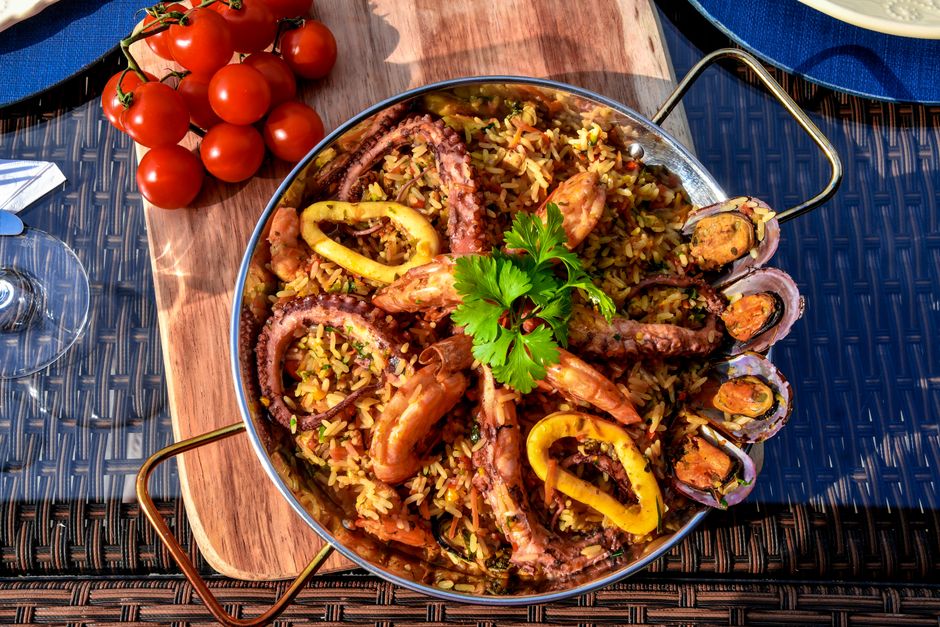
These are the two big rice dishes and the comparison that divides locals. Caldero is the working man's version. It's cooked in a rich fish stock made from the day's catch, traditionally rascasse and other small Mar Menor fish. The rice comes first, served in the pot with a bowl of alioli on the side. Then the fish arrives separately, dressed in olive oil and lemon. Simple. Deeply savoury. Completely local.
Arroz con bogavante is the celebration dish. Same idea, different budget. The stock goes orange and complex from the lobster shells, the bogavante sits on top looking dramatic, and the whole thing costs about three times as much. It's the dish you order when you're trying to impress someone who claims not to like Spanish food.
In February the kitchens aren't frantic, so both dishes get proper attention. Casa Vicente on the paseo marítimo does a solid caldero. For arroz con bogavante, ring ahead at a few places in town because some only do it at weekends as a special.
Honest verdict: Caldero is more distinctly Murcian and better value. Arroz con bogavante is more universally impressive. If it's your first time, start with caldero. If you've had it before, splash out on the bogavante.
Migas Murcianas: Tapas Bar vs Full Ración
Migas is fried breadcrumbs cooked low and slow with garlic, olive oil, chorizo, bacon and sometimes grapes or orange slices on the side. It sounds completely wrong. It tastes incredible. It is absolutely a winter dish and you won't find it on many menus in July.
The question is whether to go for the tapas bar version or the full restaurant portion. At the bar you get a small earthenware dish for a euro or two alongside your cerveza. At a proper restaurant it comes as a starter or a shared racion with all the garnishes. Both are good, but if you want to understand why this dish has been keeping people warm in Murcia for generations, go for the full version and eat it slowly.
Fair warning: it sits heavy. Don't order this before a round on one of the golf courses near Roda Golf unless you enjoy walking like a bowling ball for nine holes.
The Underrated Ones
Olla Gitana
This is Murcia's thick vegetable stew, and it's genuinely underrated compared to the flashier rice dishes. It's a potaje made with chickpeas, pumpkin, green beans, pears and a touch of paprika. No meat. Sounds strange. Tastes like someone really knew what they were doing.
You find it at traditional family-run restaurants rather than tourist-facing places. Ask for it by name. If the waiter looks confused, find somewhere else. Compared to migas it's lighter but still warming, which makes it a better choice before an afternoon on the course.
Zarangollo con Huevo
Right, the wildcard. Zarangollo is scrambled egg cooked with courgette and onion, done slowly in good olive oil until everything goes soft and golden. It's the Murcian breakfast or late brunch dish, and in winter it sorts you out properly after a cold morning walk along the Mar Menor shore.
It doesn't look like much. Eat it with crusty bread and a cafe solo and you'll understand why it's stuck around. It fills the same emotional role as a full English without the morning regret. Of all five dishes here it's the simplest, the cheapest, and the one you'll find yourself ordering twice a week without quite meaning to.
Where to Find Them
Los Alcázares town centre has a handful of restaurants that stay open year-round and do their winter menus properly. San Javier is five minutes away if you want more choice. For olla gitana and migas specifically, the inland villages around the Mar Menor are better hunting ground than the coast itself.
If you want to make a proper day of it, drive up to Lo Pagan for a caldero lunch after a walk on the salt flats. It's one of those combinations that feels earned. The Wednesday market in Los Alcázares is also worth a look for picking up local produce: fresh fish, Murcian pimentón, almonds from the campo. In February the stalls are less crowded and the vendors are actually in the mood to chat.
For more on getting your bearings around the Los Alcázares and Mar Menor area, there's plenty of local information to help you plan your time properly.
If I had to rank them honestly: caldero first, arroz con bogavante second, zarangollo for breakfast every day, migas once a week, olla gitana whenever you spot it on a blackboard outside a restaurant that looks like it hasn't changed since 1987. That one's usually the best sign of all.
February is a genuinely good time to eat here. The prices are fair, the restaurants aren't rushed, and the food on offer is the stuff that's kept people fed and warm in Murcia for a very long time. Skip any laminated tourist menu from last August. Ask what they've got on today. Point at what the table next to you ordered.
You won't go wrong.
You might also enjoy reading about 5 Family Cycling Routes Around Mar Menor This Spring.
You might also enjoy reading about May Dining in Murcia: 5 Restaurants Worth the Drive from Roda.
You might also enjoy reading about Los Alcázares in May: Mar Menor's Best Waterfront Town.
You might also enjoy reading about 5 Chiringuitos Opening on Mar Menor This May 2026.
You might also enjoy reading about 5 Family Boat Trips on Mar Menor to Book This May 2026.
You might also enjoy reading about Where to Eat Alfresco Near Roda Golf This June 2026.
You might also enjoy reading about Jun Waterparks Near Roda Golf: Best for Kids This Summer.
You might also enjoy reading about Caldero del Mar Menor: Where to Eat Murcia's Iconic Rice Dish.
You might also enjoy reading about Paparajotes: Where to Try Murcia's Signature Dessert Near Roda.
You might also enjoy reading about Beat July's Heat: Murcia's Best Granizados Near Roda Golf.
You might also enjoy reading about We Joined the Virgen del Carmen Procession in Los Alcázares.
You might also enjoy reading about We Tried Murcia's Pastel de Carne: A Local Bakery Crawl Near Roda.
Roda Golf Team
The official Roda Golf and Beach Resort team, bringing you the latest news, tips, and insights about life at the resort.